Start with the capture.
Each record describes how that capture was made and processed. Photographs, reconstructed surfaces and later repairs carry different kinds of evidence. Use the record’s method notes when assessing a model.
FOR RESEARCHERS, EDUCATORS & INSTITUTIONS
Open 3D captures with their methods, context and known gaps. A resource for teaching, visual study and further investigation.
Browse released recordsEach record describes how that capture was made and processed. Photographs, reconstructed surfaces and later repairs carry different kinds of evidence. Use the record’s method notes when assessing a model.
A closed mesh can include surfaces that were never photographed. Read the known limitations before drawing conclusions. Metric accuracy and suitability for conservation are not established by appearance alone.
Released models are marked CC BY 4.0. Retain attribution, link to the record and licence, and identify your changes. Availability of a model does not imply institutional endorsement.
Read the licence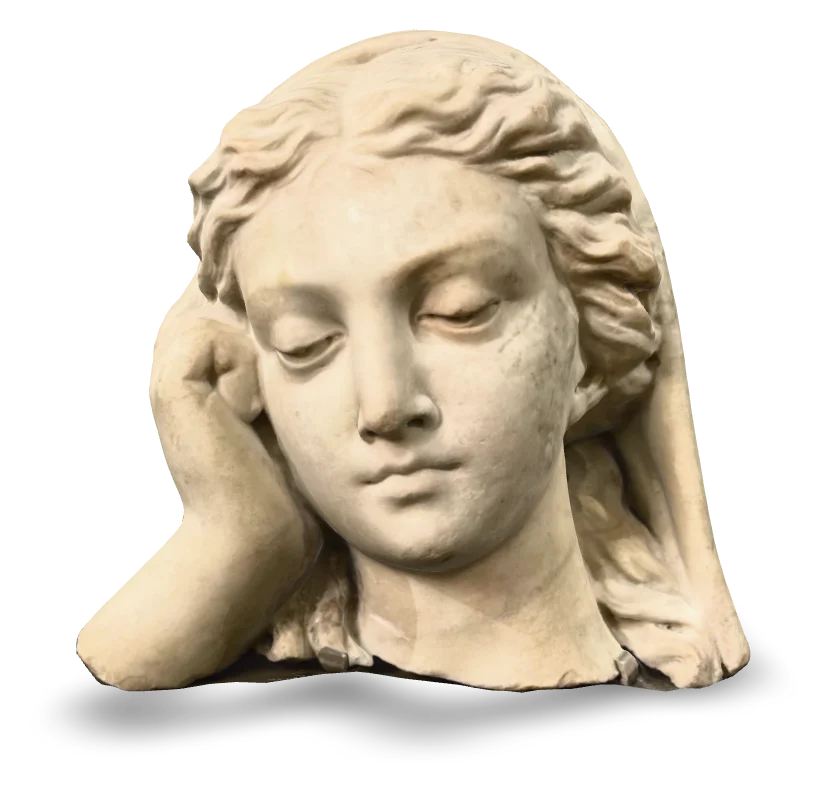
A RECORD IN PRACTICE / AA-002
The Weeping Lady was photographed against a display case’s back wall. Its unseen back is closed with a smooth surface following the head’s curvature. That surface is a processing step, not observed geometry.
Inspect the capture and notesATTRIBUTION
A starting citation for your reading list, teaching material or derivative project. Add a version identifier if your work relies on a particular downloaded file.
Atabany, Omar. “Niobe” (AA-014). ArchaeoArchive, 3D capture. https://archaeoarchive.com/view/niobe. CC BY 4.0. Accessed 2 October 2026.
Generated from the current catalogue record.
WORK WITH ARCHAEOARCHIVE
Discuss an object, collection or site with Omar Atabany. Capture access, intended use, resolution, deliverables and publication rights are agreed for each project. Private commissioned work is separate from the open archive.